

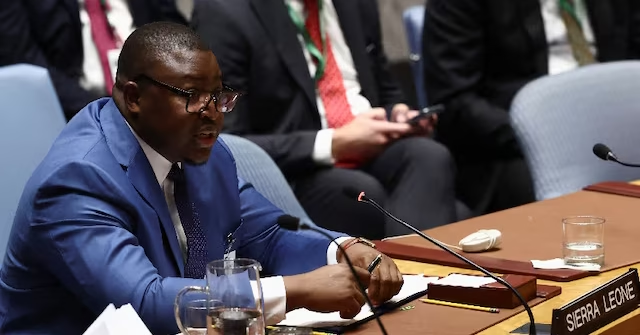
Sierra Leone has agreed to accept hundreds of West African migrants deported from the United States under a new agreement with Washington, according to Foreign Affairs Minister Timothy Kabba.
The agreement will allow Sierra Leone to receive up to 300 citizens from ECOWAS countries each year, with a maximum of 25 deportees arriving monthly. The first group is expected to arrive in Freetown on May 20 and will include migrants from countries such as Nigeria, Ghana, Guinea and Senegal.
Minister Kabba said the arrangement is part of Sierra Leone’s bilateral relationship with the United States and supports US immigration policies. However, he did not reveal what Sierra Leone would receive in return for the deal.
The agreement is part of wider efforts by the administration of US President Donald Trump to speed up deportations by sending migrants to third countries instead of their home nations. Similar arrangements have reportedly been made with other African countries in recent months.
Human rights groups and legal experts have raised concerns over the policy, warning that some deportees could face uncertainty, poor treatment or forced return to their countries despite legal protections previously granted in the United States.
Sierra Leone has agreed to accept hundreds of West African migrants deported from the United States under a new agreement with Washington, according to Foreign Affairs Minister Timothy Kabba.
The agreement will allow Sierra Leone to receive up to 300 citizens from ECOWAS countries each year, with a maximum of 25 deportees arriving monthly. The first group is expected to arrive in Freetown on May 20 and will include migrants from countries such as Nigeria, Ghana, Guinea and Senegal.
Minister Kabba said the arrangement is part of Sierra Leone’s bilateral relationship with the United States and supports US immigration policies. However, he did not reveal what Sierra Leone would receive in return for the deal.
The agreement is part of wider efforts by the administration of US President Donald Trump to speed up deportations by sending migrants to third countries instead of their home nations. Similar arrangements have reportedly been made with other African countries in recent months.
Human rights groups and legal experts have raised concerns over the policy, warning that some deportees could face uncertainty, poor treatment or forced return to their countries despite legal protections previously granted in the United States.