
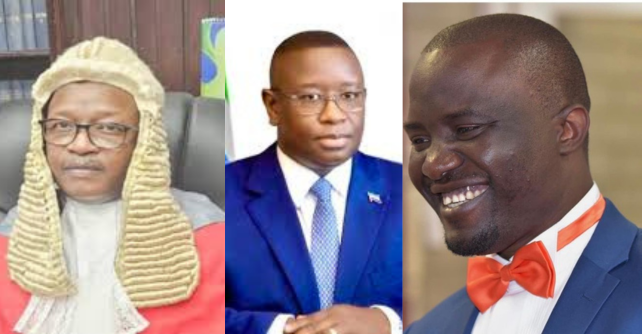
Sierra Leone’s public space was thrown into heated debate yesterday after controversial author and academic corruption campaigner Dr. John Idriss Lahai reacted sharply to a sweeping new directive issued by Chief Justice Komba Kamanda. The Practice Direction, which took effect on 1 December 2025, introduces some of the toughest anti-drug measures ever recorded in the country’s judicial history.
Under the new rules, all drug-related offences must be tried exclusively in the High Court, with judges permitted to sit even on Saturdays to fast-track hearings. Bail will be nearly impossible, except in “exceptional circumstances,” and anyone found guilty of serious drug crimes production, trafficking, or distribution faces a mandatory minimum sentence of 30 years.
While the directive has been described by some as an attempt to confront the growing drug crisis, Dr. Lahai has taken a starkly different view. In a public Facebook post, he accused the country’s leadership of preparing to weaponize the law.
According to him, the new rules could be used as a political tool against members of the main opposition party, the All People’s Congress (APC).
He wrote:
“The Chief (In)Justice and his Majesty the King, Maada Bio are planning to use this Directive against political opponents. They will plant drugs on APC members and hold them in detention until after the 2028 elections. Ar know how these Mende-tribalists dem dae work.”
However, there hasn’t been any notable arrest that is link to an APC member-most of the arrests including an 80-year old granny who was sentenced to 30 years in jail are not politically linked to any party or whatsoever.
It’s also alleged that Dr. Idris Lahai became anti-government when a job he wanted at the State House wasn’t made available to him.
Dr. Lahai’s statement was already making rounds on social media, attracting both praise and criticism alike. For many Sierra Leoneans, his warning spoke directly to their deepest and longest-held apprehensions over the abuse of state authority, particularly at the height of political rivalry.
His comments are particularly striking given his public record. Lahai has been one of the most vocal critics of fake degrees and academic fraud perpetrated by officials of government, often at great personal risk. Over the years, he has become one of the most outspoken civic voices in the country and has recently aligned himself politically with Mohamed Omodu Kamara, popularly known as Jagaban.
The timing of the Chief Justice’s new measures has added fuel to an already charged environment. Sierra Leone is still grappling with a dangerous rise in synthetic drugs, but it is also heading toward the 2028 elections at a time of deep political mistrust.
Critics of the directive argue that while firm action is necessary to curb the drug crisis, the absence of bail and the transfer of all drug matters to the High Court create a perfect avenue for abuse. Supporters counter that Sierra Leone’s courts must act decisively to protect young people and national security.
Read Also: “If You Are One of Them, Be Warned” — citizens rebuke JFK over his criticism of Chief Justice’s Directives against drugs.
For now, the judiciary has not responded to Dr. Lahai’s allegations. The government has also remained silent. Yet, as Sierra Leoneans argue over the implications of this omnibus reform, one thing is clear: drugs, justice, and politics have increasingly emerged as one of the most sensitive flashpoints in the country’s democratic journey.
Whether the directive fortifies justice or threatens political freedoms is a question the public will wrestle with for months to come.