
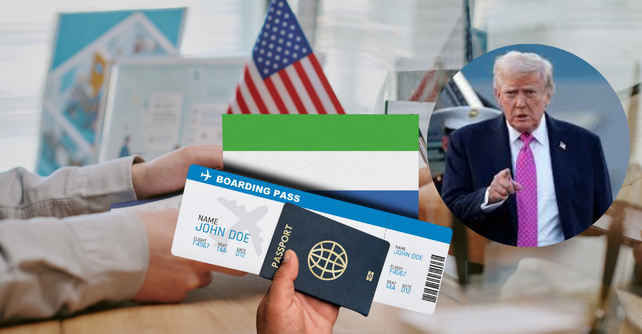
Sierra Leone has been listed among seven countries now facing partial visa restrictions from the United States, following a new policy that orders a full reassessment of visas previously issued and tightens the approval process for new applicants. The decision, outlined in a June 2025 presidential proclamation and accompanied by guidance from the U.S. State Department, marks one of the most significant shifts in U.S. immigration policy in recent years.
Alongside Sierra Leone, the affected nations include Burundi, Cuba, Laos, Togo, Turkmenistan, and Venezuela. These countries form part of a broader U.S. review aimed at strengthening national security and addressing long-standing concerns about identity-management systems and visa overstay rates.
According to the U.S. State Department’s public notice, the restrictions apply to several major visa categories, including visitor visas (B-1/B-2), student visas (F and M), and exchange visas (J). Applications for immigrant visas filed outside the United States after 9 June 2025 also fall under the new limits.
Individuals already inside the United States, lawful permanent residents, and those who held valid visas before the ban’s effective date are not directly affected. Universities and immigration advisers around the United States have issued similar clarifications, assuring that current international students from the listed countries can keep their status.
The White House proclamation cites two main concerns: weak information-sharing systems and high visa overstay numbers among travellers from the affected countries. Reports from the U.S. Department of Homeland Security placed Sierra Leone among nations flagged for insufficient security cooperation and limited ability to verify identity documents. Policy analysts note that similar reasons were used in previous immigration restrictions under earlier U.S. administrations.
A recent advisory by KPMG and other international immigration observers confirms that the review is part of a broader strategy to tighten vetting procedures and enhance cross-border data reliability.
For many Sierra Leoneans-who regularly travel for study, medical care, businesses, or family visits-the new restrictions add another level of uncertainty: Students seeking entrance to U.S. universities may face delays or denials; families seeking immigrant visas may wait even longer.
Members of the diaspora community have expressed apprehension that the policy might delay planned reunifications and interrupt long-term educational plans.
International news outlets such as Al Jazeera and Boundless Immigration report that the partial ban forms part of broader immigration tightening that includes a review of Green Cards issued to nationals of 19 countries.While Sierra Leone is not on the Green Card review list, the broader climate reflects a tougher stance on mobility from developing nations.U.S. officials argue that the measures are necessary to safeguard national security, especially as the country expands its background verification systems.Critics also say such policies would strain diplomatic relationships and increase burdens on students and travellers who rely on the opportunities provided by the U.S.
Read Also: Dr. Ibrahim Bangura Outlines Road and Agriculture Plans During Tonkolili Visit
While this restriction is in place, there is a chance for modification in the future. Historically, similar travel limitations have been lifted once nations improve their information-sharing infrastructure and documentation systems. The review process will continue over several months, and countries may be removed from the list if they meet U.S. security standards.
Meanwhile, all Sierra Leoneans planning to go to the United States are encouraged to monitor the updates from the Embassy of the United States in Sierra Leone, check visa timelines early, and prepare for possible delays.