
A self-proclaimed Ghanaian prophet who sparked widespread online attention by warning that the world would end on December 25, 2025 through a catastrophic global flood has now claimed that God has “answered prayers” and postponed the disaster. The announcement closed what has been one of the most talked-about social media phenomena of the 2025 Christmas season.
Ebo Noah, also known online as Ebo Jesus or Prophet Ebo Noah, rose to prominence this year by declaring that he received a divine vision predicting a modern-day deluge reminiscent of the biblical flood. According to the prophet, relentless rainfall would begin on Christmas Day and continue for years, leaving only those sheltered in specially built vessels safe from destruction.
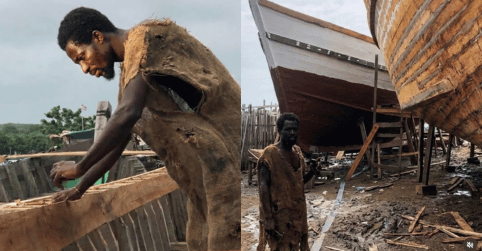
Over recent months, Ebo Noah’s message spread across platforms such as TikTok, Instagram, and YouTube, attracting millions of views and intense public reaction. In several widely shared videos, he is seen overseeing the construction of multiple large wooden ships, which he described as contemporary “arks” intended to shelter believers and their families from the impending disaster. Reports say these vessels, constructed with timber and believed by some followers to be divinely inspired, number between eight and ten across locations in Ghana.
At different times in the buildup to Christmas Day, crowds were reportedly seen moving toward the sites where these structures were located, carrying personal belongings in anticipation of “boarding” the arks. Hundreds, if not thousands, of people including believers from beyond Ghana, were said to be influenced by the prophecy and the visual spectacle of ark-like boats.
In a video message posted on social media on December 25, Ebo Noah shifted his narrative, telling followers that **God had granted humanity additional time**. He claimed that the rains and the flood would not unfold as initially predicted because the number of people seeking salvation exceeded the capacity of his vessels, prompting divine instruction to expand the effort.
“God has given us time… and instructed us to build more arks,” he said in the video, urging people not to rush to any location on Christmas Day, explaining that he was not charging for spots and that all were welcome.
This reversal has drawn wide attention online, with reactions ranging from relief among his followers to skepticism and humor from critics. Some observers on social media mocked the prediction and promised a flood, questioning the credibility of the claims. Others drew on biblical passages, particularly the covenant described in Genesis, in which God promises never to destroy the earth again by flood, to challenge the basis of Ebo Noah’s message.
Ebo Noah’s story is not an isolated internet curiosity. In an era when apocalyptic claims, viral prophets and dramatic predictions can spread rapidly online, his narrative became a global talking point in the days leading up to Christmas 2025. Videos showed him dressed in simple garments, sometimes fasting and praying, while constructing the wooden vessels that he claimed were essential to survival during the coming catastrophe.
His controversial warnings also drew the attention of authorities. According to some reports, he was briefly arrested earlier in December over concerns that his statements could cause public panic, though he was later released.
Opinion on Ebo Noah’s shifting prophecy remains deeply divided. Supporters continue to view him as a prophet preparing people spiritually and physically for divine judgement, while skeptics regard the episode as a modern example of misinformation or performative spectacle. The appearance of luxury items associated with Ebo Noah, such as a recently acquired high-end vehicle, has fueled further debate and criticism on social media.
While no scientific or meteorological authority has corroborated claims of an imminent global flood, the story highlights how online platforms can elevate individual voices and trigger intense public engagement, from genuine belief to critical scrutiny.
Read Also: A New Tempo At The Helm: Babadi Kamara And The Reawakening Of Sierra Leone Football
As the world moves beyond the Christmas date once seen as a threshold for disaster, attention now turns to how followers, believers, and observers will interpret the prophet’s revised message and what lasting impact the episode will have on faith, discourse, and online belief in the months ahead.