
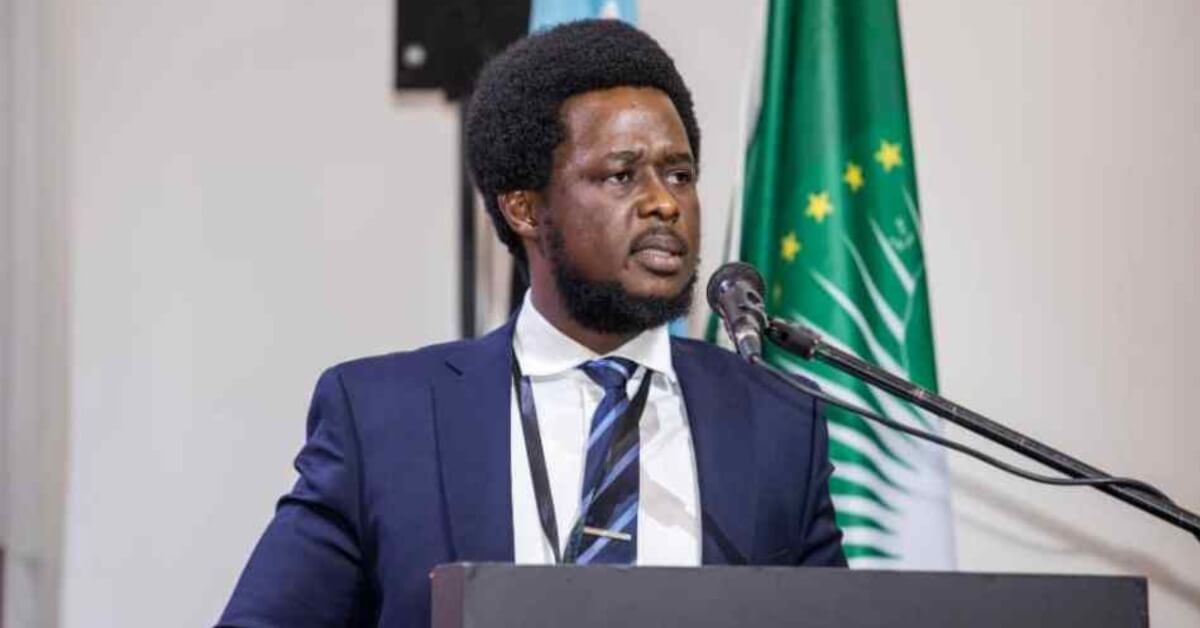
Francis Ben Kaifala, a well-known public official and legal scholar from Sierra Leone, has described the recent U.S. visa restrictions affecting Sierra Leoneans as “unfair”, especially at a time when the country is working hard to rebuild its global image.
In a public statement shared online, Mr. Kaifala said it is troubling to see Sierra Leone placed in the same category as conflict-affected nations like Somalia, DR Congo, and Afghanistan. He noted that Sierra Leone is a small nation of fewer than eight million people, and most citizens who receive visas to the United States do return home.
“America Has Been Good to Me” — Kaifala Reflects on His Experience
Mr. Kaifala highlighted his own long relationship with the U.S., saying he has benefitted greatly from American educational opportunities.
He explained that he travelled to the United States twice as a student — first as a Fulbright Scholar at the University of Texas at Austin, where he studied Comparative Constitutional Law and Human Rights. Later, he studied Public International Law and Global Governance at Harvard University on another scholarship.
“In each case, I completed my studies and returned home within a week of graduation,” he said.
He added that he has held several types of U.S. visas over the years — including B1, B2, J1, F1, and A2 — and has always returned to Sierra Leone after his visits. Many Sierra Leoneans, he stressed, have done the same.
A Small Number Should Not Define the Whole Country
Mr. Kaifala acknowledged that some Sierra Leoneans have overstayed their visas, which contributed to the U.S. decision to suspend certain visa categories. However, he argued that the numbers must be understood in context.
He questioned how many people actually apply for U.S. visas each year and how many receive approval, noting that the overall figures are small compared to the nation’s population.
He estimated that even if the overstay rate is listed at 12 percent, the real number of people involved might be around 2,000 — a figure he believes should not define the entire country.
“Yes, some people have let us down,” he said. “But we must look at the ratio of those who returned home compared to those who overstayed.”
He added that many who overstay are driven by fear of returning to the challenges at home, including poverty and limited opportunities.
Kaifala: “America First Is Understandable, But Sierra Leone Is Not the Enemy”
Mr. Kaifala said he understands why the U.S. takes strong steps to protect its borders, noting that he has long supported the idea of countries putting their citizens first.
He stated that Sierra Leone, too, needs to protect its national identity and prevent exploitation by outsiders. However, he believes the U.S. decision to place Sierra Leone on a list with countries experiencing severe instability does not match the reality on the ground.
“We are working hard to reposition ourselves among the great nations of the world,” he said. “We are not Somalia, DR Congo, or Afghanistan.”