
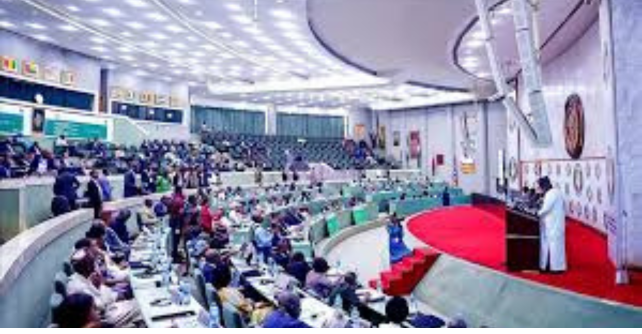
The Economic Community of West African States has issued one of its strongest warnings in recent years, declaring that the region is now facing conditions serious enough to be described as a state of emergency. The announcement came from the President of the ECOWAS Commission, Dr. Omar Alieu Touray, during the 55th Session of the Mediation and Security Council held in Abuja.
Dr. Touray told ministers and senior regional officials that West Africa is experiencing an accumulation of political and security threats that can no longer be treated as isolated incidents. He said that the latest assessments of member states show an average level of “high risk,” with several countries grappling simultaneously with internal political strain, armed groups, and rising geopolitical pressure.
He pointed to the attempted military takeover in Benin, the crisis in Guinea-Bissau, and stalled transitions in other states as clear signs of democratic decay. According to him, elections have increasingly become flashpoints rather than moments of national consensus, deepening fractures within already fragile systems.
The Commission President further noted the growing presence of extremist networks and criminal groups that move easily across borders. These pressures, he said, require a united regional response rather than isolated national efforts.
“In light of these developments, it is evident that our community is confronted with a situation that amounts to an emergency,” he said, urging the Mediation and Security Council to meet more frequently in the coming year.
Dr. Touray also highlighted the scale of the humanitarian burden facing the region. Citing recent UNHCR statistics, he explained that West Africa now hosts more than 7.6 million displaced people, including over 6.5 million internally displaced persons. Nigeria, Niger, Mali, Burkina Faso, Togo and Côte d’Ivoire remain among the countries bearing the heaviest loads.
Despite these troubling indicators, he assured citizens of the region that ECOWAS remains committed to promoting stability and constitutional order. He called on member states to reaffirm their dedication to democratic norms and to stand firm against external pressures that risk fragmenting regional unity.
Sierra Leone’s Minister of Foreign Affairs and Chair of the Council of Ministers, Timothy Kabba, echoed the concerns, describing the recent military incidents in Benin and Guinea-Bissau as warnings that democratic institutions remain vulnerable. Kabba emphasised the need for ECOWAS to deliver decisions that can restore confidence among citizens who are increasingly impatient with unfulfilled promises.
He also recounted Sierra Leone’s role in helping mediate tensions in Guinea-Bissau earlier in the month, saying it demonstrated ECOWAS’s collective refusal to accept unconstitutional power grabs.
The minister urged the meeting to focus on tangible outcomes, not just reaffirmations of principle, stressing that ordinary West Africans expect solutions that match the urgency of the challenges.
The Abuja meeting sets the stage for a critical summit of Heads of State and Government, who are expected to consider the Council’s recommendations as part of broader efforts to reinforce democratic governance, improve security cooperation, and stabilize a region grappling with multiple crises at once.
Read Also: The Fight Against Kush: Hill Station Sports Promoters Take a Stand
As West Africa enters another uncertain year, ECOWAS leaders say the priority must be a renewed commitment to collaboration and a stronger collective response to threats that increasingly cross borders and weaken states from within.