
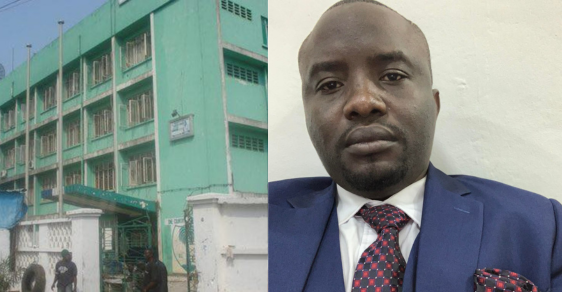
A fresh wave of controversy has swept across Sierra Leone’s political landscape following a fiery comment posted by author, whistleblower, and academic Dr. Idris Lahai, who suggested that the internal tensions within the ruling Sierra Leone People’s Party (SLPP) are reaching a breaking point.In a blunt and provocative Facebook post, Dr. Lahai painted a vivid picture of looming internal chaos. He wrote, “Dis SLPP party office get for burn before de 2028 elections. You know who dat get for burn am? De SLPP executive officers – from Chairman, Secretary General (fake PhD doctor) to de zonal leaders dem.”
His words were not framed as a warning of external attack, but as a prediction of self-inflicted collapse. He suggested that the very leaders entrusted with safeguarding the party’s unity might be the ones to ignite its downfall.
Dr.Lahai’s comments appear connected to a recent episode that reportedly saw the SLPP party office gates locked during a tense internal disagreement. The decision to restrict access, especially to high-ranking figures including the First Lady, has been widely discussed in political circles and on social media.Dr. Lahai alluded to that standoff, adding a layer of symbolism to the locked gates. “En ar hope sae Madam First Lady go focus on the gate. Because na de gate dem bin batin. Me sef go join First Lady for pwell de main gate. Na wae gate dae dae chairman go bring padlock or lovk gate.”
His decision to single out the First Lady has polarized debate, with both supporters and critics speculating whether what happened is a signal of deeper fractures in the SLPP’s leadership structure.
While officials of the SLPP have not commented publicly on the post, several party sympathizers have also reacted in frustration over what they describe as “internal sabotage” and “power blocs wrestling for dominance.” The post by Dr. Lahai directly touches on these sentiments, insinuating that the struggle for control is now threatening the party’s broader stability ahead of the 2028 elections.
What makes the statement all the more striking is that it comes from a public figure known for confronting political and academic misconduct. His imagery of party executives bringing “petrol” and “lighter” has been interpreted by many as a metaphor for destructive factionalism, rather than a literal act. Yet the strong language has nonetheless ignited heated reactions online.
Critics are quick to counter that the post sensationalizes internal issues for political effect. Supporters close to Dr. Lahai maintain that his comments simply call attention to tensions building behind closed doors and to grievance accumulation long overlooked.
The controversy also speaks to broader concerns of transparency inside the ruling party, including alleged gatekeeping, exclusionary decision-making, and competing camps vying for influence.
Dr. Lahai concluded his post with a punchline that invites confrontation rather than closure: “Una go tell me back.” It is a challenge, a provocation, and perhaps a signal that the conversation is only beginning.
Whether viewed as an expression of frustration, a metaphor for internal conflict, or a deliberate strike at SLPP leadership, Dr. Lahai’s comments have reopened questions about discipline, unity, and direction within the party.
Read Also: From War-Wounded Child to Voice for Justice: The Story of Abass Sesay
At a time when Sierra Leoneans expect calm and leadership from those in power, the public feud real or symbolic within the SLPP raises deeper questions:
Can the party manage its internal disagreements before they spill wide into the public arena? And how will the leadership respond to a critique that has now captured national attention?