

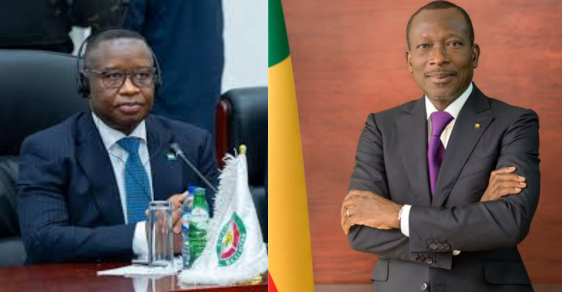
After a brief but serious military takeover attempt on Sunday, calm has largely returned to Benin as loyal security forces and regional partners helped thwart the rebellion and restore order.
According to the government and regional observers, a group of mutinous soldiers calling itself the Military Committee for Refoundation (CMR) seized the national television station early Sunday and proclaimed the removal of President Patrice Talon, the dissolution of institutions, and the closure of borders and airspace.
Within hours, however, units loyal to the government regained control. The regular army reclaimed the broadcast facilities, restored communications, and cleared pockets of resistance. According to Benin’s Interior Minister, the mutiny was “foiled”.
President Talon addressed the nation Sunday evening, thanking the armed forces for their loyalty and promising that those behind the mutiny “will not go unpunished.”
Regional Response: ECOWAS Deploys Standby Force, Restores Constitutional Order
Hours after news broke of the attempted takeover, ECOWAS condemned the coup plot as unconstitutional and pledged support for the government.
Under the leadership of Julius Maada Bio, ECOWAS ordered the immediate deployment of its Standby Force. The deployment draws troops from multiple member states including Nigeria, Sierra Leone, Côte d’Ivoire, and Ghana to assist Benin’s military in preserving constitutional order and safeguarding national institutions.
Sierra Leone in particular has responded to the call, contributing troops to the regional mission.
In his Facebook post, Bio welcomed the return to normalcy. He commended President Talon’s leadership and the bravery of the Armed Forces for thwarting the coup. He thanked fellow Heads of State for their solidarity and efforts in defending democracy and constitutional rule in Benin.
Since Sunday’s events, there have been growing signals that everyday life is returning to normal in key parts of Benin. Traffic has resumed, shops have reopened, and citizens have resumed routine activity. Some observers note that the heightened military presence appears to be drawing down.
International backing — from ECOWAS, the African Union, and other partners — together with the security forces’ swift action, seems to have preserved both constitutional order and public calm.
Read Also: State House Issues Alert Over Fake AI Video Featuring President Bio
It is argued that the failed coup and the rapid response to the coup attempt might, in fact, improve Benin’s reputation for a robust democracy, especially in the wake of the upcoming elections in 2026. The timeliness of the ECOWAS intervention demonstrates the organization’s preparedness to take decisive measures when the rule of law and the order of the country are threatened. The prompt action taken by the countries in ECOWAS, with Bio at the helm, demonstrates a collective commitment to preventing any form of unconstitutional changes of government. This intervention has been viewed by some researchers as a means of discouraging any possible military coup in Benin and the entire region. Through active intervention, ECOWAS has made its stand clear against any military coup in the region. Despite the restoration of constitutional order, the attempted coup demonstrates the presence of tensions in Benin. The government and its regional counterparts are expected to be ever-vigilant in the country. Security and stability will be of the highest priority in light of the parliamentary and presidential election scheduled for 2026. Currently, the wider stability, in terms of security forces loyalty, regional cohesion, and resilience, presents a platform for the perpetuation of the perception that democracy in Benin is unshaken.