

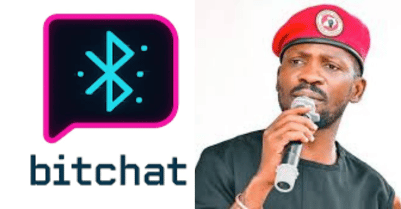
As Uganda moves closer to its January 14, 2026, general elections, opposition leader Robert Kyagulanyi, popularly known as Bobi Wine, is once again preparing for a contest shaped as much by technology and state power as by ballots and campaign speeches.
This week, Bobi Wine urged his supporters across the country to download Bitchat, a decentralized messaging application designed to function without internet access. His warning was blunt and rooted in experience. He believes the Ugandan government may shut down the internet and social media platforms during the election period, a tactic that has become familiar under President Yoweri Museveni’s long rule.
Bobi Wine pointed directly to Uganda’s recent past. During the elections of 2021, internet shutdowns were imposed by the government that lasted for four days, affecting social media platforms and internet connectivity at a time when information was crucial. Human Rights groups criticized internet shutdowns, terming it an attempt by the government to hamper transparency and preventing the people from documenting events.
The opposition leader said Bitchat offers a practical response to that threat. The app allows users to communicate offline through Bluetooth, enabling the sharing of messages, images, and election materials even if mobile data and broadband services are disabled. Developed by Jack Dorsey, co-founder of Twitter, the new messaging service does not use phone numbers or emails. This makes it very hard to limit the use of the service. The service has already been used in protests in other countries such as Madagascar and Nepal. The government had tried to limit the usage in the two countries.
For Bobi Wine, the move is not about technology for its own sake. It is about survival in a political environment he says is designed to suffocate dissent.
Since leaving music to pursue politics, Bobi Wine has experienced numerous arrests, physical violence, and limitcations of his freedom. His campaigns have been marred by police interference, his rallies prevented, and his fans arrested. He contested the 2021 presidential election, which he lost to President Museveni, who had been in power since 1986. He contested the election results, citing intimidation, violence, and irregularities. His fans had been killed or gone missing during the campaign period, according to human rights groups.
The government, on the other hand, has always disputed any claims of doing wrong and has explained that the necessary security activities are being undertaken to create order. The government has also explained that the shutdowns of the internet in the past have been a means to restrict the spread of misinformation and violent acts.
Within this setting, the appeal by Bobi Wine to resort to alternative means of communication is part of the struggle over control of information during elections. When the internet is controlled by one person, and all means of communication are suppressed by the state, the threat of an internet shutdown is highly politicized.
By encouraging offline communication networks, Bobi Wine is signaling that he expects the playing field to remain uneven. It is also an admission of how constrained opposition politics in Uganda has become, where candidates must plan not only for votes, but for blackouts, arrests, and silence.
Read Also: Huge Youth Support as Dr Emmanuel Saffa Abdulai Addresses Crowd in Kabala
As election day approaches, the question is no longer just who will win, but how much space will exist for citizens to organize, observe, and speak freely. Bobi Wine’s message is clear. If the internet goes dark again, his movement intends to keep talking, sharing, and documenting, even in the shadows.