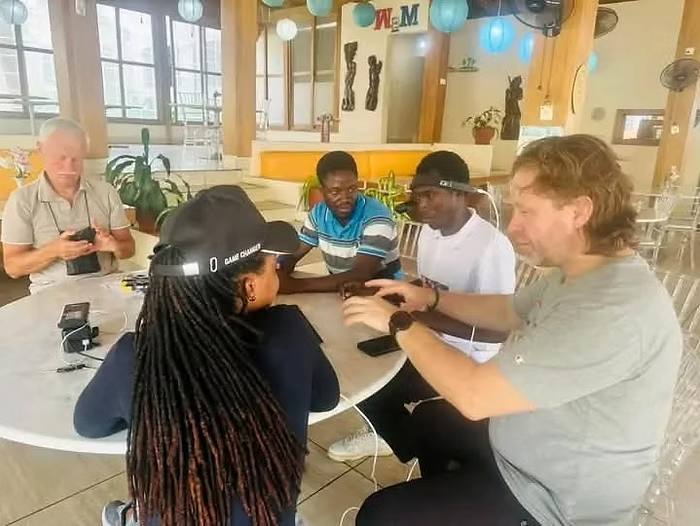
Afrovate Tech Hub has trained five people in Sierra Leone to use RealWear technology, a hands-free wearable device designed to support technical work and communication in the field.
The three-day practical training was conducted by two volunteers from the Human Assistance Technology Lab (HATL), a programme under Engineers Without Borders (EWB) Denmark.
The participants, including tutors from Afrovate Tech Hub, received practical lessons on operating the technology and exploring how it could be used in different working environments.
RealWear devices are wearable computers that allow users to access digital information while keeping their hands free to perform other tasks.
The technology can support workers carrying out technical inspections, maintenance and other field activities where using a handheld device may be difficult.
According to information published by Sarah Kallay Blog, the training followed earlier discussions between Afrovate Tech Hub and Engineers Without Borders Denmark on opportunities for technical cooperation.
The Human Assistance Technology Lab works to identify technologies that could support projects undertaken by Engineers Without Borders. Its areas of interest have included wearable devices and drones.
During the training, participants were introduced to the operation of RealWear equipment and its possible applications in practical situations.
The programme is expected to help Afrovate Tech Hub develop local expertise in wearable technology and enable its tutors to share the knowledge with other learners.
The initiative also reflects growing interest in introducing emerging technologies into technical education and field operations in Sierra Leone.
Although wearable computers are used in some industries internationally, their wider adoption in Sierra Leone would depend on factors including equipment costs, technical support, training and access to reliable connectivity where required.
Afrovate Tech Hub said the collaboration with Engineers Without Borders Denmark provided an opportunity to exchange technical knowledge and strengthen local skills.
However, no details were announced about plans to expand the training, the number of devices available or whether the technology would be introduced into specific projects.
The three-day programme forms part of cooperation between the two organisations aimed at exploring how technology can support practical work and skills development in Sierra Leone.


