

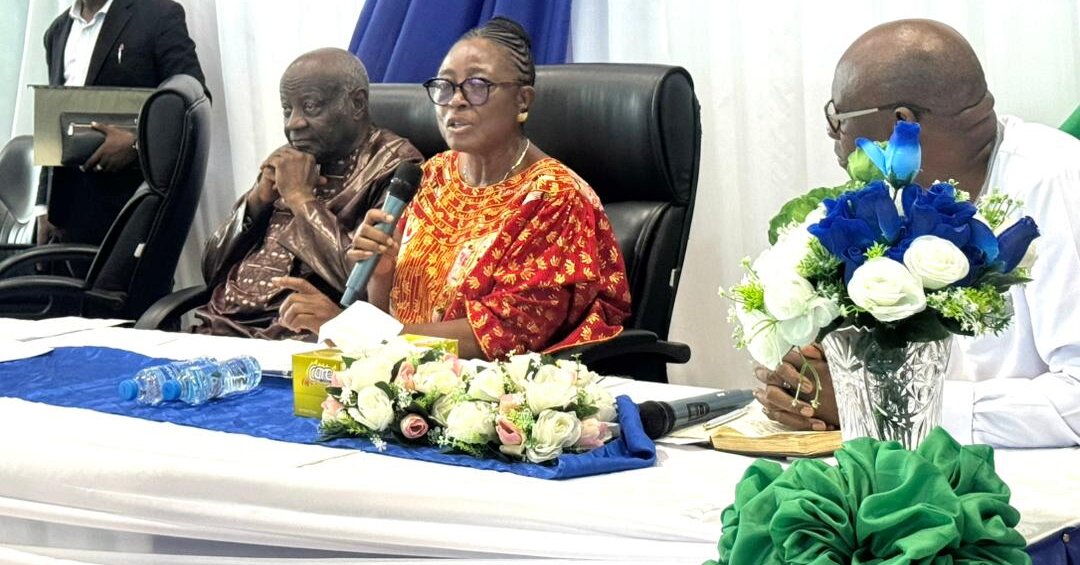
The Anti-Corruption Commission (ACC) of Sierra Leone marked a significant milestone, celebrating 25 years of unwavering commitment to combating corruption across the nation.
Chernor Bah, Minister of Information and Civic Education, delivered the opening remarks as chairperson of the event. He lauded Francis Ben Kelfala and his team for their exceptional work in the fight against corruption. Bah expressed pride in welcoming attendees to this momentous occasion, emphasizing that it commemorates the silver jubilee of one of Sierra Leone’s pivotal institutions.
He recalled that over 25 years ago, Parliament enacted legislation that established the ACC, creating an independent body mandated to fight corruption nationwide. Bah reflected on the institution’s journey, noting its evolution from being labeled a “toothless bulldog” to a formidable force in the fight against corruption.
Debra Laprevotte, Head of Investigation and Restitution Impact, shared her insights after decades of investigating corruption. She emphasized that money remains the core issue, stating, “In my 20 or 30 years of investigating corruption, I have found that there is one constant cause: money. It has always been all about the money.”
Laprevotte highlighted that over a trillion dollars are illicitly transferred from Africa annually through embezzlement, corruption, smuggling, kickbacks, money laundering, and other illicit activities. She praised the ACC’s efforts, noting their strong rule of law approach and an impressive 90% conviction rate for cases taken to court. She urged citizens to be vigilant and to provide information when they witness corruption, emphasizing that fighting corruption is a collective responsibility.
Alphonsus B. M. Gbanie, Executive Secretary of the Human Rights Defenders Network Sierra Leone, reaffirmed the link between human rights and anti-corruption efforts. He described corruption as a violation of human rights, stating that defenders of human rights actively oppose corrupt practices that undermine social, political, economic, and cultural rights.
Gbanie committed his organization’s support to the ACC’s work, praising its human rights-based approach to empowering citizens. He urged the ACC to reflect on challenges faced over the years and to strengthen its institutional framework to better address corruption through human rights principles.
Francis Ben Kelfala, Commissioner of the Anti-Corruption Commission, delivered the keynote address on behalf of President Julius Maada Bio, who was unavoidably absent. He underscored the importance of the day, reflecting on Sierra Leone’s history and the critical role of the ACC in rebuilding the country post-civil war.
Kelfala recounted that corruption was identified as a major obstacle to national development following the war, and that the absence of a dedicated system to combat it hindered progress. He shared personal memories from high school when he first learned about the ACC and the concept of integrity.
He paid tribute to previous commissioners and staff members, acknowledging their contributions to the institution’s growth. Kelfala emphasized that many countries had transformed their stories by making corruption a public issue and fostering a culture of integrity.
He recalled the first case he was aware of—an investigation into Justice Tajudeen, who was accused of accepting bribes—highlighting the importance of trust and responsibility in public office.
The event concluded with a panel discussion, where attendees provided recommendations for strengthening the fight against corruption. The celebration underscored Sierra Leone’s ongoing commitment to transparency, accountability, and good governance.