
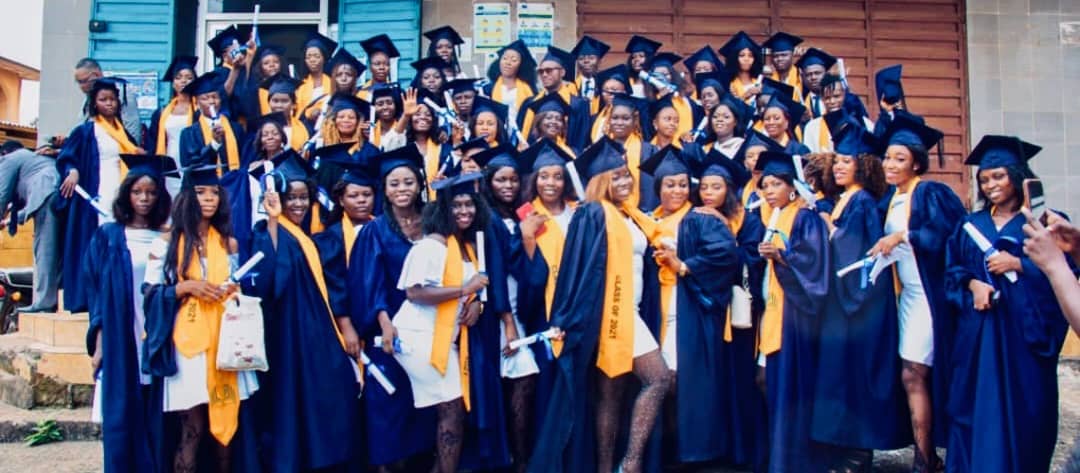
The College of Medicine and Allied Health Sciences (COMAHS), University of Sierra Leone, will on Wednesday, 3rd December 2025, graduate a total of 843 students from different medical and health fields. This graduation is one of the biggest for the college, and it comes at a time when Sierra Leone is working hard to increase its number of trained doctors, nurses, and other health workers.
The graduands are coming from fifteen medical and health subfields, including medicine and surgery, medical laboratory sciences, nursing, public health, pharmacy, radiography, physiotherapy, and other important areas. The ceremony will mark the end of many years of training, sacrifice, and hard work for students who entered the college with the dream of saving lives and improving healthcare in Sierra Leone.
Breakdown of the 2025 Graduating Class
College officials confirmed that:
79 students will graduate with Bachelor of Medicine and Bachelor of Surgery (MBChB) degrees.
39 students at the bachelor level will graduate with degrees in Medical Laboratory Sciences.
229 candidates will receive Higher Diplomas in Nursing, one of the largest numbers in this category in recent years.
22 students at the diploma level will graduate in Medical Laboratory Sciences.
The rest of the graduands come from other key health programmes, including community health, pharmacy technician studies, dental therapy, physiotherapy, radiography, and environmental health.
Officials say this wide range of skills reflects the college’s goal of building a strong and diverse health workforce that can serve both urban and rural communities across the country.
A Major Achievement for COMAHS
The College of Medicine and Allied Health Sciences was established in 1988 as Sierra Leone’s first medical school. Before then, young Sierra Leoneans who wanted to become doctors had to travel to other countries such as Nigeria, Ghana, or Uganda. For many, this was expensive and difficult.
COMAHS started with a small number of students and limited facilities, but over the years it has grown into the country’s leading institution for training doctors and health professionals. The college now runs programmes in:
Medicine and Surgery
Nursing
Biochemistry
Pharmacy
Physiology
Community Health
Medical Laboratory Sciences
Mental Health Nursing
And several allied health fields
The college works closely with Connaught Hospital, 34 Military Hospital, Ola During Children’s Hospital, Princess Christian Maternity Hospital, Lumley Government Hospital, and other health facilities across the country, where students do their clinical training.
Graduation at COMAHS is always an important national event because the country continues to face a shortage of doctors and nurses. Many hospitals and community health centres still operate with limited staff, and rural health posts often rely on one or two trained workers to serve thousands of people. This makes every new graduate an important addition to the national health system.
Why This Graduation Matters
The 2025 graduation comes at a time when Sierra Leone has fewer doctors than needed for its population. Official reports show that the country has about 350 doctors actively working, while some sources say the number may be slightly above 500. Even if the higher figure is used, it is still far below the World Health Organisation (WHO) recommendation.
Sierra Leone has a population of more than eight million people. This means that the country has roughly one doctor for every 16,000 to 20,000 people, depending on which estimate is used. The WHO recommends at least one doctor for every 1,000 to 2,000 people for a strong and effective health system.
Because of this, every new doctor or trained nurse makes a big difference. They fill key roles in hospitals, health centres, laboratories, and emergency care units. They also help improve maternal health, child survival, disease control, and general health services.
Officials say the 79 new doctors graduating this year will boost the medical workforce, especially in areas like surgery, internal medicine, paediatrics, obstetrics and gynaecology, and emergency care.
From Years of Study to a New Beginning
Most of the students graduating with medical degrees have spent six or seven years studying basic sciences, clinical sciences, and doing hospital rotations. Their training involved long hours, night calls, exams, and practical work in real-life situations.
Many of them helped during national health challenges, including disease outbreaks, mass vaccination drives, and community health outreach programmes. During their clinical years, medical students supported doctors and nurses at teaching hospitals, where they learned how to diagnose illnesses, treat patients, and manage emergencies.
For students in nursing, laboratory sciences, and other allied health fields, the journey was also demanding. These programmes include both classroom learning and practical sessions in laboratories and health facilities.
Nursing students trained in areas like:
Midwifery
Mental health
Community health
Medical-surgical nursing
Maternal and child health
Laboratory science students trained in microbiology, haematology, parasitology, histopathology, and clinical chemistry. They play a very important role in diagnosing illnesses and guiding doctors on treatment.
As graduation day approaches, many students are excited and emotional. They have spent years away from their families, studying late at night, and facing financial and personal challenges. Some worked part-time to support themselves. Others received scholarships from government, private partners, or foreign organisations.
For parents, the graduation is a proud moment. Many families see this as a major achievement because not everyone gets the chance to study medicine or health sciences in Sierra Leone.
Looking at the Bigger Picture
Graduation from COMAHS is not just about giving out certificates. It is part of a larger effort to strengthen the country’s health system. Sierra Leone has faced serious health challenges in the past, including:
The civil war (1991–2002), which destroyed many health facilities
The Ebola outbreak (2014–2016), which killed many health workers
Flooding and landslides that stressed emergency services
COVID-19, which demanded more trained staff
These events showed the need for more skilled health professionals. The government, development partners, and the university have been working to expand training opportunities and improve health education.
The 2025 graduating class reflects this progress. With 843 new health workers joining the system, Sierra Leone can expect improvements in service delivery, especially in communities that struggle with limited staff.
Employment and Deployment Challenges
While graduation is a big moment, it also brings questions about employment. In past years, some graduates faced delays in government recruitment. New doctors often wait months before being posted to hospitals or district health centres. Nurses and laboratory workers have also faced delays.
Health experts say that to get full value from these new graduates, the government must:
1. Speed up recruitment
2. Provide clear deployment plans
3. Invest in health facilities
4. Improve salaries and working conditions
5. Support continuous training
Some graduates may choose to work in private hospitals, NGOs, research centres, or even travel abroad for further studies. However, many say they want to serve Sierra Leone first.
The Hope for a Stronger Health Workforce
Sierra Leone has made progress in health over the years. Child mortality has reduced. Access to healthcare has improved. More facilities are offering Caesarean sections, vaccinations, and emergency care. But the journey is still long.
With this new batch of 843 graduands, the country is taking another step forward. These young professionals will help strengthen:
Maternal health services
Child health
Disease surveillance
Laboratory systems
Hospital care
Community health
Research and public health
Many believe that if Sierra Leone continues to train more people in medicine and allied health, the country will reduce its dependence on foreign medical support and build a stronger national system.
A Day of Celebration
As 3rd December draws near, students are preparing for the big ceremony. Academic gowns are being ironed. Families are getting ready to attend. The university grounds will be filled with proud parents, friends, and well-wishers.
For the graduates, this is not just the end of a journey. It is the start of a new chapter—one where they will carry the responsibility of saving lives, comforting patients, and contributing to national development.
The College of Medicine and Allied Health Sciences continues to play a leading role in shaping the future of healthcare in Sierra Leone. And with 843 new health workers set to join the system, the country is hoping for better days ahead.