
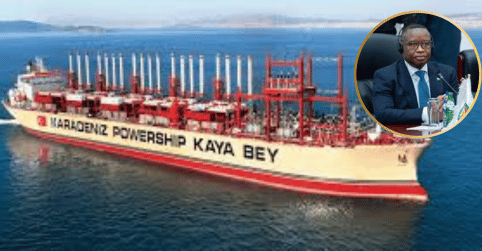
Sierra Leone’s long struggle with electricity took another sober turn this week after the Minister of Energy disclosed the scale of the country’s unpaid power bills. According to a statement shared by Myk Berewa, Head of the Communications Unit at State House, Sierra Leone currently owes close to 50 million dollars to Karpowership, about 20 million dollars to another foreign power supplier, additional sums to several solar companies, and outstanding payments to Guinea for cross-border electricity supply. The figures are stark, but they tell only part of a much deeper story.
For many Sierra Leoneans, electricity is not a given. It is rationed, unpredictable, and often absent altogether. Homes plan their evenings around blackouts. Small businesses close early or spend heavily on fuel for generators. Hospitals, schools, and water works facilities are under constant stress, never knowing when the lights will go off.
Despite the various reforms and emergency responses over the years, Sierra Leone still remains one of the lowest in accessing electricity on the African continent and internationally. Less than a quarter of the country’s people are connected to the main electricity grid; in the rural areas, the figure is much lower. In the international rankings, Sierra Leone always fares poorly in terms of electrification.
The debts now being discussed did not appear overnight. They are the result of years of stop-gap solutions used to keep lights on in the capital and other urban centers. Karpowership, for instance, has been a very critical lifeline to Freetown when it came to power, offering a floating source of power when domestic capacity could not meet demand. Importation of power from Guinea has also helped in ensuring that power shortages during peak hours are stabilized. Solar companies also closed gaps that could not be reached by power lines.
These innovations were not without cost. As fuel prices rose, foreign exchange tightened, and public finances remained under strain, unpaid bills accumulated quietly in the background.
The Energy Minister’s disclosure has brought those obligations into public view at a time when citizens are already frustrated by erratic supply. It raises difficult questions about sustainability. How long can the country rely on expensive emergency power while struggling to pay for it? What happens if suppliers lose patience or reduce output? And how does a nation expand access when it is already behind on existing commitments?
Read Also: Public Outcry Grows as Rights Groups Demand Release of Edwina Jamiru
Energy experts warn that debt alone is not the core problem. The deeper challenge is one of limited generation capacity, aging infrastructure, high transmission losses, and a fragile economy in which long-term investment is difficult. So long as these remain unaddressed, no amount of borrowing power will be anything other than a very temporary fix.
For ordinary Sierra Leoneans, however, the threat has a far more immediacy. They fear darker nights, higher tariffs, and businesses closer to going under. Electricity after all is not just about comfort; electricity is jobs, safety, learning, and dignity.
As the government grapples with these debts, many here hope for a broader national conversation-one that surpasses numbers and contracts. How does Sierra Leone move from mere survival mode to stability? From borrowed power to homegrown solutions? And from being ranked among the least electrified nations in the world to a country where light is no longer a privilege, but a basic part of life.