

By Lawrence Williams
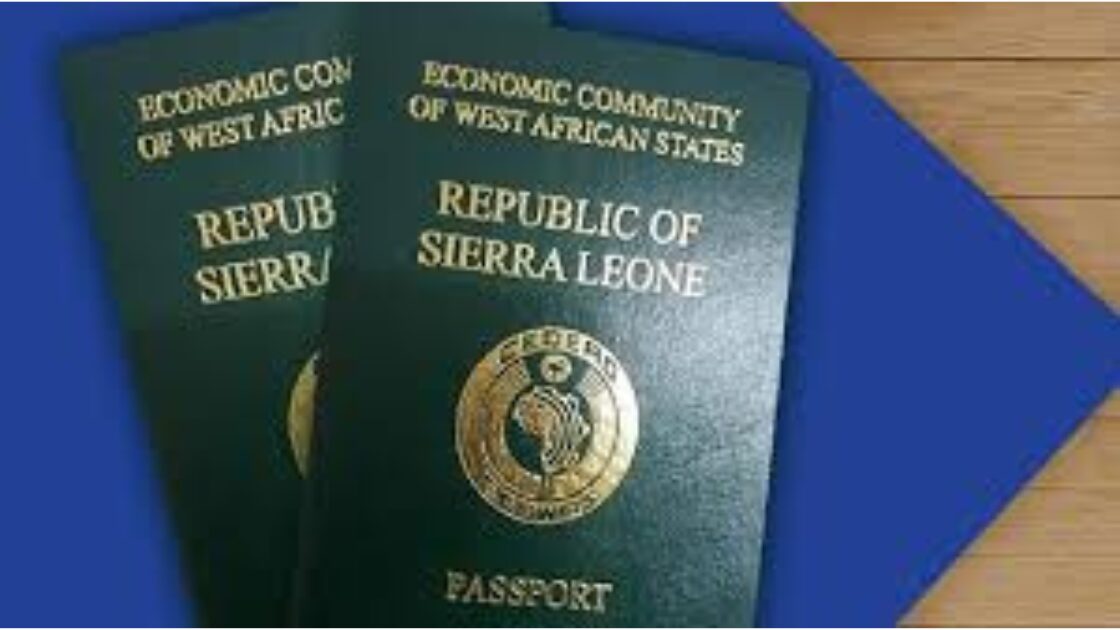
A national passport is far more than a travel document or a collection of biometric chips. It is the ultimate physical manifestation of the social contract—the legal proof of citizenship and the primary instrument of state sovereignty. When the management of that document falls into a legal grey area, it isn’t just an administrative hiccup; it is a direct challenge to the rule of law.
The unfolding controversy surrounding the Netpage passport contract in Sierra Leone has moved beyond the realm of simple procurement. It has become a litmus test for our constitutional democracy.
The facts are increasingly difficult to ignore. The original agreement, ratified by Parliament in 2013, reached its natural conclusion in 2023. Yet, evidence shows the contract was renewed in the shadows, devoid of Cabinet clearance and stripped of parliamentary ratification. For more than a year, Sierra Leone may have been issuing its most sensitive security document under an arrangement that lacks a valid legal foundation.
In a constitutional democracy, “close enough” is not a legal standard.
The Public Accounts Committee (PAC) has already fired a warning shot, ruling the royalty clause invalid because it bypassed parliamentary oversight. This creates a staggering paradox: if a single clause is unconstitutional due to lack of approval, how can the entire renewed contract be treated as operationally sound? The law is not a buffet; the government cannot pick and choose which portions of the Constitution to satisfy and which to ignore.
Beyond the legal technicalities lies a massive financial question mark. Passport production is a multi-million-dollar industry. Yet, the flow of revenue remains opaque. While billions of leones in royalty payments were reportedly approved for refund to Netpage to settle tax liabilities, the public remains in the dark. Were those taxes actually paid? Or was this a convenient accounting manoeuvre conducted away from the light of public scrutiny?
Furthermore, we must address the security dimension. Biometric data is the “new oil”, and the integrity of our identity verification systems is paramount. If the state cannot demonstrate absolute legal and institutional control over who manages this data and under what authority, we risk eroding not just domestic trust but the international credibility of the Sierra Leonean passport itself.
This saga forces us to ask a painful question: is constitutional governance a binding discipline or merely a procedural box to be ticked when convenient?
If a major national contract can expire, be resurrected in private, and continue to operate without ratification, we are setting a scorched-earth precedent. It signals to every future contractor and public official that institutional safeguards are optional—that the “back door” is always open for those with the right keys.
Read Also: Sierra Leone Celebrates Gospel Legend Vicky Fornah on Her Birthday
The remedy is simple, though it requires political courage:
Full Disclosure: Publish the contract in its entirety.
Legal Clarity: State the exact legal authority used for the renewal.
Institutional Return: Submit the agreement to Parliament immediately or reopen the process to competitive bidding to ensure the taxpayer gets the best deal.
Democracy does not survive on assumptions of legality; it survives on the proof of it. When the document at stake defines our very identity as a nation, the rule of law must not just exist—it must be seen to lead.