
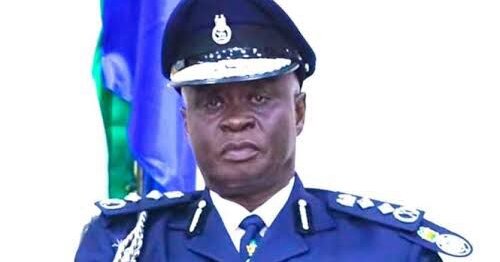
At a season when the streets of Freetown throb with colour, music and anticipation, an unexpected figure emerged from behind the walls of command and protocol. Not in a motorcade, nor shielded by tinted glass, but on foot and beneath the open sky, moving from junction to junction with quiet deliberateness. The Inspector General of Police, Mr William Fayia Sellu, stepped into the public square not merely as the nation’s chief law enforcement officer, but as a citizen among citizens, bearing gifts, bearing messages and carrying a symbolism that stretched far beyond Christmas goodwill.
At the historic Cotton Tree and across the arteries of Western Urban and Western Rural, his presence rewrote a familiar script. For the first time in the history of the Sierra Leone Police, a serving Inspector General personally undertook a grassroots festive outreach, distributing Christmas gifts to drivers and vulnerable members of society. It was a moment both modest and momentous, modest in its material form and momentous in its meaning. The streets became a stage on which the human face of policing was revealed with deliberate clarity and moral purpose.
For decades, a persistent refrain has echoed in public discourse, that the police are seen more often as collectors than contributors, enforcers rather than caregivers. Whether fair or flawed, this perception has long strained the relationship between law enforcement and the public. It is against this backdrop of scepticism and historical distance that Mr Sellu’s actions acquire their full significance. His outreach did not simply distribute gifts. It challenged a narrative, replacing suspicion with visibility, distance with dialogue and authority with accountability rooted in empathy.
From congested urban junctions in Freetown to the quieter rhythms of Western Rural communities, the Inspector General paused to listen, to engage and to reassure. Drivers, traders and vulnerable citizens were not hurried past but acknowledged. The gift bags, containing mugs, pens and fans, were practical rather than extravagant, yet each carried carefully worded cautionary messages. These items became everyday reminders that safety, order and civic responsibility are not abstract ideals but daily obligations.
The central message delivered by the Inspector General was both humane and firm. The Sierra Leone Police, he emphasised, belong to the people. Public safety is a shared responsibility, and genuine celebration must never descend into recklessness. Festivity, when anchored in respect for the law, preserves lives, protects property and allows families and communities to enjoy the season without grief or disorder.
The cautionary notices printed on the gift items outlined clear legal boundaries. Citizens were reminded that excessive noise after 10.00 p.m. contravenes Section 13 of the Public Order Act of 1965. Street processions, carnivals and similar public activities require written approval from the Inspector General under Section 17 of the same Act. The firing of guns, rockets or fireworks was firmly condemned under Section 6, reaffirming the nationwide ban on fireworks throughout Sierra Leone.
Motorists were reminded that driving under the influence of alcohol constitutes an offence under Section 102 of the Road Traffic Act of 2007. The use of unregistered vehicles, prohibited by Section 5 of the same Act, was highlighted, alongside the restriction that vehicles bearing G plates or Temporary Vehicle Registration numbers must not operate after 6.00 p.m. All vehicles, the notices stressed, must be used strictly for their registered purposes. Commercial motorcycle operations remain prohibited within Freetown’s Central Business District, while masquerades, mask devils and religious bodies planning street processions were reminded of the legal requirement to obtain prior police clearance.
To ease festive movement and prevent congestion, designated parking spaces were announced at Lumley and Aberdeen beaches. Towing vehicles were deployed to enforce parking regulations and remove improperly parked vehicles. The message was unambiguous. Celebration would be welcomed, but disorder would not be tolerated. Law and liberty, the police insisted, must advance together.
This measured combination of generosity and regulation reflects a deeper institutional philosophy. The Inspector General’s outreach was not a mere act of seasonal charity. It was a deliberate expression of modern policing, one that integrates compassion with compliance and visibility with vigilance. Its constitutional grounding is explicit. Section 155 of the 1991 Constitution of Sierra Leone mandates the police to protect life and property, preserve internal security, maintain law and order and promote public safety and tranquillity. These duties extend beyond enforcement to include prevention, dignity and the cultivation of public trust.
The Truth and Reconciliation Commission further reinforces this broader conception of policing. In its final report, the Commission called for state security institutions to evolve into people centred services anchored in respect for human rights, accountability and community trust. Its specific recommendations for the Sierra Leone Police emphasised visible, humane and community engaged policing as essential to reconciliation and sustainable peace in post conflict Sierra Leone. By pairing festive goodwill with lawful guidance, Inspector General Sellu translated these principles from policy into lived practice.
The moral and spiritual dimensions of this leadership approach are equally compelling. Christian teaching reminds believers, in Acts 20.35, that it is more blessed to give than to receive. Islamic teaching echoes the same ethic, with Qur’an 2.177 defining righteousness as compassion, charity and care for the vulnerable. These shared values across faiths affirm a universal truth, that service to humanity, guided by moral responsibility, is central to peace, unity and social harmony.
By deploying his resources to uplift the less privileged while simultaneously reinforcing civic discipline, Inspector General William Fayia Sellu set a precedent of rare clarity. His message was unmistakable. Celebration must walk hand in hand with responsibility, and security is strongest where compassion and compliance coexist. If such leadership were embraced more broadly across public institutions, the result would be stronger social cohesion, reduced preventable harm and a safer, more united Sierra Leone.
As the Inspector General and the Sierra Leone Police extended Christmas and New Year greetings to the nation, wishing citizens a bright and prosperous New Year in 2026, the outreach endured as more than a festive gesture. It stood as a compelling reminder that effective policing is not measured solely by enforcement statistics, but by presence, humanity and principled guidance, by a badge willing to step into the light.