
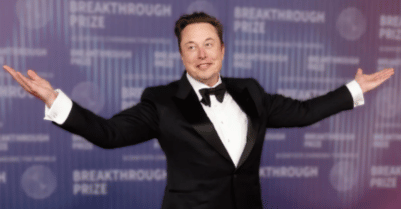
A single sentence from Elon Musk has once again set the internet on fire. Replying to billionaire investor Ray Dalio on X, Musk wrote with trademark certainty: “There will be no poverty in the future… There will be universal high income.”
The comment came in response to Dalio’s praise for a growing bipartisan effort involving the Trump administration, the Dell family, and philanthropic institutions working together on social and economic challenges. While Dalio focused on cooperation and shared responsibility, Musk went further. In his view, the very idea of saving money to fight poverty may soon become obsolete.
Musk’s statement reflects a belief he has hinted at for years.He argues that rapid advances in technology, especially artificial intelligence, automation, and robotics, will dramatically increase productivity. When machines can produce goods and services at near-zero marginal cost, scarcity, as we understand it today, begins to fade. In that world, Musk believes, basic needs such as food, shelter, and energy could be met for everyone.At the center of this vision is the idea of a universal high income. Unlike traditional welfare systems or even universal basic income, Musk’s phrasing suggests something broader and more permanent.It implies a future where people are not merely supported, but economically empowered by the abundance created through technology.
The reaction on social media has been varied. The supporters of this tweet by Musk say that his comment is optimistic, and it has some roots in technological trends. They are referring to trends like low costs for renewable energy resources, and advancements in computing capabilities which are changing at an exponential rate, and changes in automation that are transforming sectors at a rapid pace. Critics, on the other hand, tread carefully. They suggest that fairness cannot simply be ensured by the use of technology. The forces of wealth distribution, the role of power, education, and the challenges of equality across the world remain. For some, poverty has both technical and social, as well as political, definitions. It may widen the gap instead of removing it if the right decisions are not made. Nevertheless, his utterances must also be considered seriously since they raise a rather fundamental issue regarding the future of humanity. If machines do most of the work, what happens to human purpose, labor, and dignity? Musk has previously said that meaning, not survival, will become the central challenge of future societies.
Read Also: “I was promised acting work” – Sierra Leonean 18-year-old on being trafficked to Nigeria
Whether one sees his statement as visionary or naive, it has succeeded in doing what Musk often does best: forcing a global conversation. Itself a testament to the progress made, the idea of poverty itself becoming extinct may seem like a far-off dream, especially with millions of people around the world having difficulty affording even the most basic requirements of life. At the moment, however, it is a forecast rather than a promise. But it does represent a recognition by the founders of the top tech firms that the future more and more may not be determined by what it lacks but rather by how it chooses to share its riches.