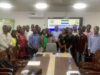

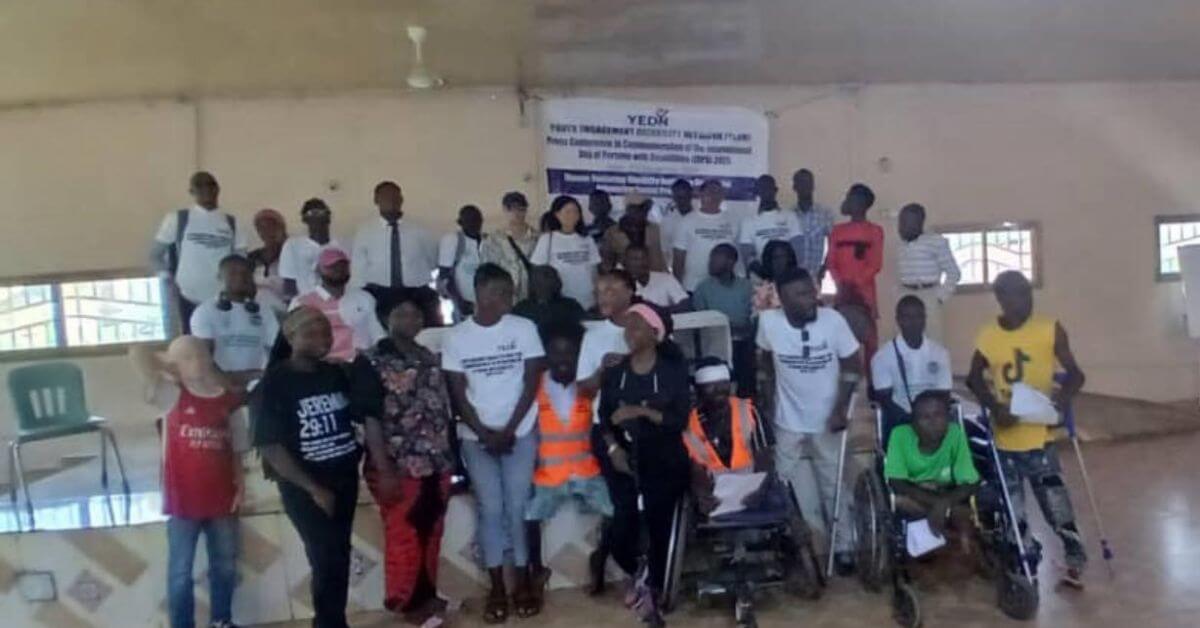
In Freetown, on 7 December 2025, people with disabilities and their allies gathered to call on the government to deliver real inclusion. The event marked International Day of Persons with Disabilities.
The crowd was led by Youth Engagement Disability Network (YEDN), whose Executive Director, Hamid Mo-Kamara, spoke passionately. He warned that many disabled people are still blocked from quality education — even though global goals like the Sustainable Development Goals (SDGs) include inclusive schooling.
Mo-Kamera pointed out a glaring contradiction: some top universities in the country — including Fourah Bay College (FBC), Institute of Public Administration and Management (IPAM) and College of Medicine and Allied Health Sciences (COMAHS) — demand that disabled students pay a graduation fee of Le 3,000. This is despite a law, the Persons with Disability Act 2011, which exempts them from tuition at recognised institutions.
Only 21 students with disabilities graduated from those institutions this year. That number, said Mo-Kamara, exposes how far the “Free Education Programme” is from being meaningful for all Sierra Leoneans.
In addition to education, exclusion extends to employment. The Disability Act ensures equal access to jobs, yet many qualified individuals with disabilities remain without work — victims of discrimination or inaccessible workplaces.
At the event, James Abraham George, Senior Administrative Assistant for Special Needs at Fourah Bay College, spoke from experience. He said the challenges are twofold — harmful attitudes and structural barriers. He noted that while FBC has added some wheelchair-friendly facilities, many public and private buildings in Freetown still lack ramps and other basic accessibility features.
George urged society and institutions to embrace what he called a “human face” — one that sees the rights and potential of persons with disabilities, instead of their limitations.
Some called out the government’s absence from the event as a sign of “indifference.” Not a single official among those invited showed up — a point many said underlines the risk of empty promises without concrete action.
Advocates warned that Sierra Leone cannot achieve real development if it continues to exclude a significant portion of its citizens. “Inclusion is the true test of quality,” said Mo-Kamara.
They are now renewing their demand: allocate at least 5% of scholarships to students with disabilities, make public buildings accessible, enforce employment rights — and treat disability inclusion as a country-wide priority, not an afterthought.