

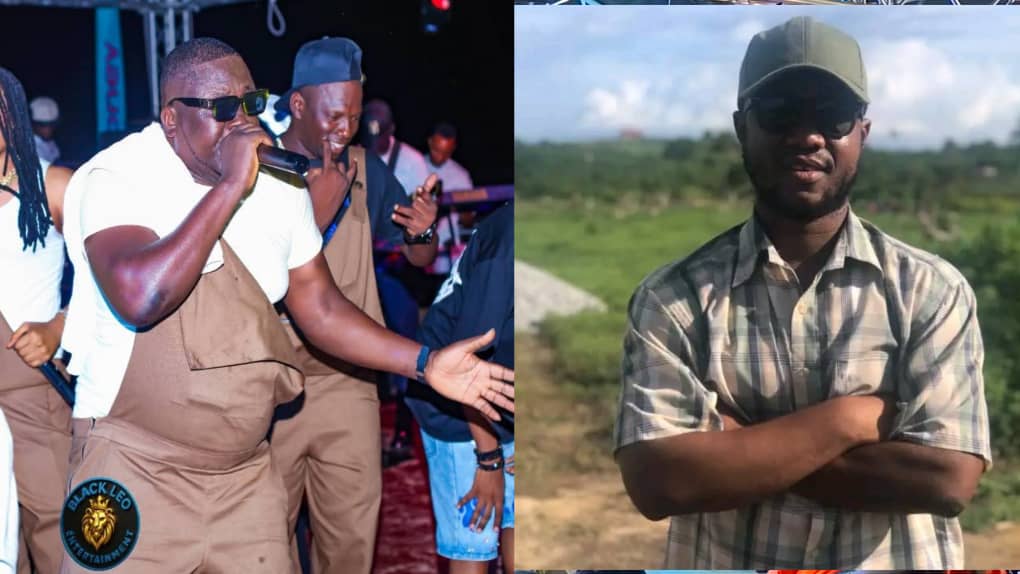
Like many music enthusiasts, I have often been critical of Kao’s general conduct in the music industry. Nevertheless, one thing you can never question is his artistry, which has kept him relevant for three decades. His style and sneaker choice at the “All Game Final” album release exemplify this. Unsurprisingly, this has led to lively debates on social media. Those ridiculing his style are either utterly unaware of hip-hop’s history or disconnected from Kao’s artistic growth, which is evident right before our eyes.
Upon seeing Kao Denero’s outfit, I immediately recognized him as a genuine student of hip-hop. His clothing conveyed a few subtle messages. He was strategic, deliberate, and intentional with his choice of outfit.
When DJ Kool Herc created hip-hop in 1973. He built the genre around four core elements: MC’ing, DJ’ing, graffiti art and break dancing. As the genre evolved in the late 80s, fashion and style became a symbol. This was solidified by LL Cool J, who was probably the biggest ‘pop star’ of hip-hop at the time. Towards the 90s, hip-hop shifted to overall outfits and Timberland boots. New York rappers like Nas, Jay-Z, DMX, Busta Rhymes, Mobb Deep and Wu-Tang Clan were known for this signature style, especially for performances. The New York rappers of the 90s saw hip-hop as an alternative to drug dealing as a livelihood.
By the early 2000s, Nelly, Luda, Fabolous, Diplomats, G-Unit, and Cash Money shifted the dress code to sports regalia, with baseball, basketball, and American football outfits seen across multiple hip-hop videos. By the 2010s, the culture was saturated with a fashion style that came across as feminine, over-the-top, and problematic.
To start with, Kao Denero’s concert took place amid intense negative publicity. This included a major government ministry scheduling a festival on the exact date of his event, being verbally abused at an FBC concert, being sidelined from performing at the One Nation Reggae Festival despite multiple rehearsals and having clips of his media interviews deliberately extracted for social media banter. He aimed to demonstrate his resilience through his choice of outfit, inspired by the late hip-hop icon DMX. In 1999, DMX faced significant controversy when he was booked to headline Woodstock, with many questioning why a rapper was chosen to headline a rock festival and criticizing his personality and lyrics. DMX’s stage attire—red overalls and Timberland boots—symbolized rebellion and resilience. Kao emulated this bold stance by entering the stage at Number 2 wearing overalls and Timberland boots.
Hip-Hop is currently experiencing a resurgence of the OGs. The golden-era rappers are making a strong comeback. Nas and Premo have released a new album, EPMD’s Eric Sermon is promoting his Dynamic Duo project, Wu-Tang Clan is selling out arenas on the Final Chamber tour, Mobb Deep’s Infinite album is in my rotation, Snoop Dogg has purchased Deathrow Records, Pharrell collaborated with Clipse on Let God Sort Em Out, Ice Cube released Man Up, Killer Mike won best rap album at the latest Grammys at age 48, and Busta Rhymes is receiving accolades like his Hollywood Walk of Fame star. Kao, a true student of the game, observes fans worldwide returning to nostalgic feelings from his formative era. His outfit pays homage to the influences who are making a comeback. Like these OGs, Kao has stayed true to his lyrical style and never sold out to mumble rap. If you listen to Kao’s interview, he constantly places himself in the comparative bracket of these guys.
I have no regrets about inviting Kao Denero to speak at Fourah Bay College. I wish some of my senior colleagues had let me shape the event’s vision, but I had to step back due to creative differences.
Artistry goes far beyond music—the way you dress sends a message, and Kao deliberately chose to wear overalls and Timberland boots.

Paul A. Conteh (Octopus)
Lecturer, University of Sierra Leone
15th December, 2025