
The capital of Sierra Leone, Freetown, witnessed one of its darkest days in modern times on January 6, 1999—a day that is still remembered in the hearts of many families and survivors. That morning, armed fighters from the RUF and allied militia forces launched a brutal invasion of the city in the midst of a long, grueling civil war that had ravaged the country since March 1991.
How the War Began: From Border Incursion to Nationwide Conflict
The Sierra Leone Civil War began in March of 1991 when the RUF, led by Foday Sankoh, crossed into Sierra Leone from neighboring Liberia. The group’s professed aim was to oust the then-government, citing deep-rooted corruption, economic inequality, and poor governance — issues which resonated among many disenfranchised Sierra Leoneans.
Through the exploitation and control of diamond-rich areas within the east and southern regions, it was able to finance its war efforts through the trading of what were labeled “blood diamonds.”
The conflict involved various parties along the way. Coup d’états, changes in alliances, and intervention by regional and global actors were characteristics of various phases of the conflict. Governments went into transition, Peace Accords were signed and broken, but fighting continued. Encyclopedia Britannica
January 6th: The Invasion of Freetown
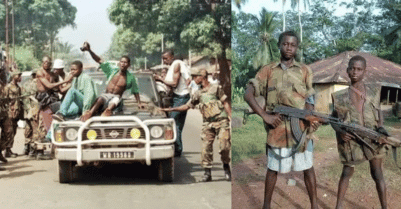
By late 1998, RUF/AFRC (Armed Forces Revolutionary Council) forces were moving ominously close to Freetown, having captured vast swathes of the countryside and several key cities. In the early hours of January 6, rebel combatants broke through ill-prepared defenses and poured into the capital.
The attack rapidly escalated into a terror campaign. While rebels took over major areas of the city, they launched incomprehensible attacks on citizens, shooting those who were trying to escape, setting buildings on fire, disfiguring corpses, and mass raping victims.
“An account was given of a family who was stopped while trying to escape and ordered executed by a rebel, their car was emptied of rounds from the rebel’s rifle, killing members of the family, including an infant.”
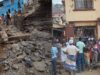
Human Rights Watch and other observers documented systematic atrocities: indiscriminate executions, amputations, rapes, and arson were rampant. Entire streets were reduced to rubble and thousands of residents were forced from their homes.
As the result of the horrific offensive, it has been reported that thousands of civilians could have lost their lives, as many as 5,000 to 7,000, and tens of thousands left homeless and frightened as the result of the siege at Freetown.
The Sierra Leone Civil War, in essence, was a combination of both political grievances, economic neglect, and opportunistic resource exploitation. The RUF claimed that the political leaders had let down their nation, whereas there seemed to be a lack of a political agenda attached to this civil war.
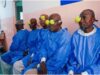
Yet the human cost was unquestionable. Over the eleven years of fighting, around 50,000 people are believed to have died and as many as 2 to 2.5 million were displaced, uprooted from their homes and forced into refugee camps or makeshift settlements both within Sierra Leone and across its borders.
“The war is infamous for its toll in lives, as well as for its brutality. Terror was a tactic used repeatedly by insurgents, with mutilations involving the amputation of hands and limbs becoming all too commonplace, while rape, with some estimates indicating that hundreds of thousands of women and girls were violated, was widespread.”
Children were also not spared. Many were forced to join the fighting ranks, while many lost their families as well as their childhoods.
Aftermath and Legacy
International and regional forces eventually began to push back against the rebels. Peace efforts culminated in the Lomé Peace Accord in July 1999, although fighting continued in subsequent years until peace was finally declared in January 2002.
After the war, it has been a challenge for the country to heal. A Truth and Reconciliation Commission has been formed to document the offenses and provide recommendations on the manner in which the country should move ahead. The trauma caused by the war in the country’s physical, psychological, and societal fabric has left an indelible mark on the community’s psyche.
For people in Sierra Leone, January 6 is not just an important historical date in a textbook. It is a reminder of what could happen if governance is poor, if conflict is allowed to simmer, if people get caught in the middle of a struggle for political power.
Read Also: ‘This Is Inhumane’: Opposition Leader Kamarainba Mansaray Highlights Drug Crisis as Kush Addicts Lie Unattended on Freetown Streets
It is a tragic reminder of what is lost, but it is also, for the living and for those of us striving for peace, a reminder of the resilience and hope of a world where this kind of violence will never happen again.