
A fresh wave of tension is building within Sierra Leone’s education sector after the Sierra Leone Teachers Union (SLTU) formally reminded the Ministry of Basic and Senior Secondary Education of unpaid school fee subsidies, even as millions of leones are being committed to national celebrations.
In a letter dated 8 December 2025 and addressed to the Minister of Basic and Senior Secondary Education, the SLTU expressed concern that the agreed backlog of 2024–2025 fee subsidies, as well as the first-term subsidies for the 2025–2026 academic year, remain unpaid. The letter, signed by SLTU Secretary General Morris S. Conteh, notes that the delay persists despite assurances from both the Ministry of Education and the Ministry of Finance.
The timing is critical. Schools are expected to close in the coming weeks for the Christmas holiday, a situation the union warns could lead to yet another backlog of unpaid subsidies, deepening financial strain on schools that already operate on thin margins.
The letter was copied to key government officials, including the vice president, the minister of finance, and the leadership of the Teaching Service Commission, signaling that the issue has moved beyond routine correspondence into a matter of national concern.
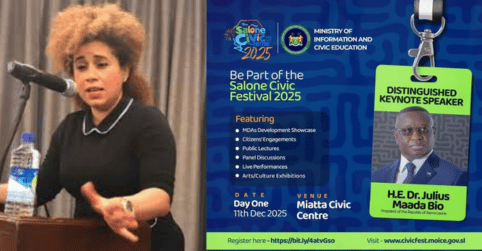
While teachers wait, public debate has intensified following a pointed Facebook post by prominent lawyer and human rights advocate Basita Michael. Reacting to the letter, she drew attention to the contrast between unpaid education commitments and government spending priorities.
“Funds for festivals.
No funds for school subsidies.
Education: ‘A top priority’,” she wrote, ending with a rolling-eyes emoji that quickly captured public frustration.
Her post referenced the National Civic Festival scheduled for 11–13 December, an event funded by the state and featuring top government officials. For many teachers and parents, the optics are troubling. They see celebrations moving ahead smoothly while classrooms struggle to function without promised support.
Behind the figures are real consequences. Fee subsidies help schools pay staff, keep children in class, and prevent vulnerable families from being pushed out of the education system. When payments are delayed, school administrators borrow, teachers absorb unpaid labor, and students face uncertainty.
For teachers, the issue cuts deeper than money. It touches trust. The SLTU reminds the government that payment of these subsidies formed part of the resolutions that ended the last teachers’ strike. Failure to honor that agreement risks reopening old wounds and raising fresh questions about government credibility.
As festive banners go up across the capital, many educators are asking a harder question: what does it say about national priorities when classrooms are told to wait, but festivals move ahead on schedule?
Read Also: Alonzo Cleared of All Drug Charges After Four-Month Drug Case
For now, the teachers say they are still waiting for “prompt intervention.” Whether that intervention comes before schools close may determine not only the mood of the holidays but also the direction of the education debate in the months ahead.