

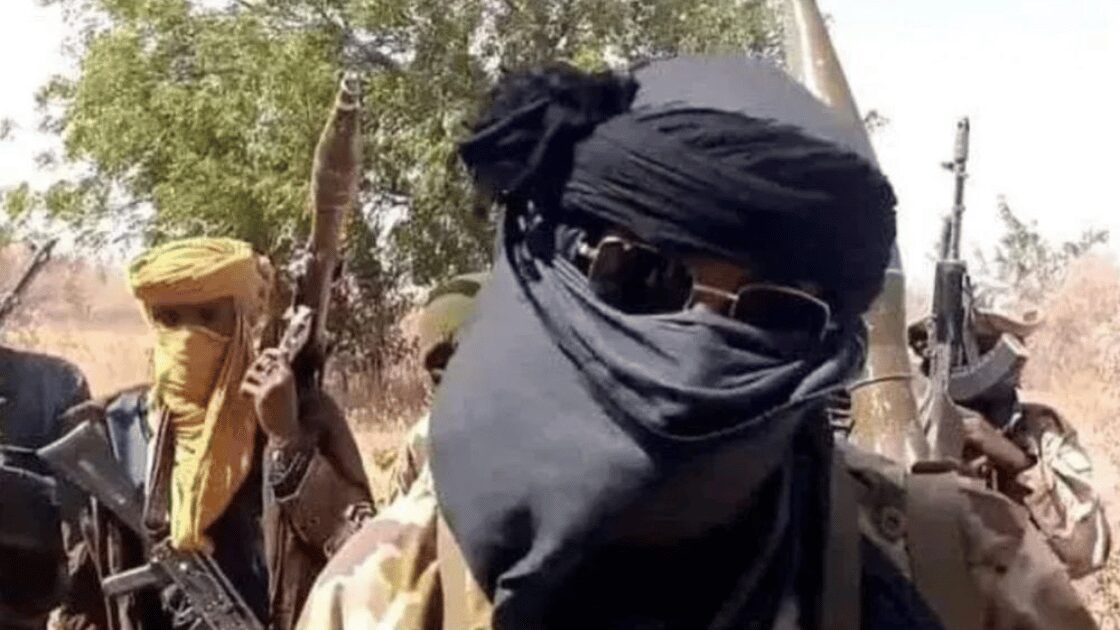
They arrived at 11:47 PM, armed with AK-47s, and operated for nearly an hour without resistance. Two friends celebrating love became two more victims in Nigeria’s most battered local government area a community that has now suffered four major attacks in less than two months.
The music was playing. The guests were gathered. Families had come from near and far to celebrate what should have been one of the happiest nights of two people’s lives. Then, at exactly 11:47 PM on Sunday night, the shooting started.
Armed bandits heavily armed, numerous, and utterly unopposed stormed the wedding venue at Kahir village in Kagarko Local Government Area of Kaduna State, opened fire indiscriminately on guests packed inside the celebration hall, killed at least 13 people, wounded several others, and abducted an unspecified number of attendees before disappearing into the darkness of the Nigerian night.
Reports say the attackers operated for nearly an hour without resistance. A resident, Shehu Bala, confirmed the attack to reporters: “In fact, there are two of my friends who were inside the hall that also sustained bullet injuries during the attack.” Bala added: “It is difficult to know the exact number of those kidnapped because of the heavy shooting.”
Several injured victims were rushed to Kagarko General Hospital, while those with more serious wounds were transferred to Kaduna for further treatment.
The victims were killed by suspected bandits who also abducted many residents, burnt properties, and looted food and medicines. A community leader, speaking on condition of anonymity, provided the names of some of those killed: Bako Danjuma, Williams Luka, Peter Williams, Joseph Yakubu, Victor Peter, John Dan Asabe, Angulu Markus, Maikano Aribi, Douglas John, Ado Yakubu, Zaphaniah Alhaji, Joseph Kaddah, and Francis Unguwa Doya.
Thirteen names. Thirteen families shattered. Thirteen people who dressed up for a wedding and never came home.
The attack caused widespread panic in the community, with many residents fleeing into the bush to escape the sporadic gunfire. The venue a wedding hall filled with the kind of crowd that attends such celebrations in rural Nigerian communities, multigenerational, joyful, unarmed and unguarded offered the attackers no resistance and no obstacle.
The choice of a wedding as a target is not random cruelty. It is strategy. Weddings in rural communities are among the few occasions that reliably draw large numbers of people from multiple villages into one place at one time creating a concentration of potential kidnapping victims and a single predictable location that bandits can surveil in advance and strike at their chosen moment.
Police authorities in Kagarko confirmed the incident but said they are still gathering details, especially regarding the number of people kidnapped. The spokesperson of the Kaduna State Police Command, DSP Hassan Mansur, also confirmed the killings and abductions, adding that a full report will be released after investigations are completed.
The state’s Deputy Governor, Dr. Hadiza Sabuwa Balarabe, and a serving senator visited the injured victims receiving treatment at the hospital in Kagarko. Their presence at the hospital was noted. But in communities that have been asking for security presence for months not hospital visits after the fact the gesture carried a bitter edge.
Sunday night’s wedding massacre is not an isolated incident in Kagarko Local Government Area. It is the latest and most deadly chapter in what has become an unrelenting campaign of terror against a rural community that appears to have been entirely abandoned by the Nigerian state’s security architecture.
The recent pattern is devastating in its frequency and its escalation.
On February 9th, armed bandits stormed the Kutaho and Kugir communities in Aribi Ward of Kagarko at approximately 2 AM, abducting a bride-to-be identified as Peace Williams Lami who was set to be married on April 6th along with a Catholic catechist, his heavily pregnant wife, and approximately 32 others. The parish priest of St. Joseph Catholic Church confirmed that fear had gripped the area, forcing over 90 percent of residents to flee to neighbouring villages for safety.
Those victims were not freed quietly. Bandits subsequently threatened to kill all 32 abducted villagers unless a ransom of N30 million and four motorcycles was delivered a demand issued to already impoverished farming families whose livelihoods had already been crippled by years of insecurity.
On March 2nd, bandits attacked Janjala Village in Kagarko, injuring one resident Shamsu Adamu, 25, with a gunshot wound to the stomach and abducting an unspecified number of villagers during a midnight raid.
Then came another attack in Makarfi LGA in early March, and now Kahir village. Daily Trust had earlier reported that several communities in Kagarko, including Janjala, have been under repeated attacks. Fourteen people, including a vigilante operative and his wife, abducted three weeks ago, are still in captivity.
That detail fourteen people abducted three weeks ago, still missing sits alongside the new victims from Sunday night’s wedding massacre. In Kagarko, the missing do not come home quickly. Many do not come home at all.
Understanding what is happening in Kagarko requires understanding the economic logic of the banditry that has consumed northwestern Nigeria’s rural communities.
These are not opportunistic criminals. They operate with a level of intelligence, planning, and organisational sophistication that speaks to embedded networks networks that surveil target communities over weeks, identify wealthy families, gather intelligence on community events, and strike with precision. The wedding in Kahir was not stumbled upon. It was known about. The attackers came prepared, in numbers, with weapons, and with a plan.
The kidnapping economy they have built is self-sustaining. Reverend John Maiaper, chairman of the Christian Association of Nigeria in Aribi Ward, described how recurring attacks have crippled farming in the area communities once widely known for ginger farming have abandoned their most valuable crops because farmers cannot safely reach their fields. “Our people depend on farming, especially ginger, but insecurity has made farming almost impossible,” he said.
The destruction of the agricultural economy increases poverty. Increased poverty reduces communities’ ability to pay for private security and reduces the government’s tax base for public security. Reduced security produces more attacks. More attacks produce more displacement. More displacement reduces the community’s ability to defend itself. It is a spiral and Kagarko is deep inside it.
Fr. Bobai, the parish priest who confirmed the February kidnappings, noted that soldiers stationed in a neighbouring community had earlier been informed following initial threats but residents were later told the area lacked regular security patrols. “More than 90 percent of our people slept outside the community. Only a few of us remained behind to keep vigil. Our members cannot continue to run indefinitely,” he said.
That statement made after the February kidnappings could have been written word for word after Sunday night’s massacre. The bandits came. The security forces were not there. People died. Officials confirmed it. A report will be released. And in three weeks, or five weeks, or whenever the moment is right, the bandits will come again.
Kaduna Governor Uba Sani has repeatedly stated that his government has “zero tolerance for conflict merchants” and conducts that breach peace and security. Those statements have been issued after the February kidnappings, after the March 2nd Janjala attack, after multiple other incidents. They have been issued, noted, and filed while the bandits have continued operating in Kagarko with near-total impunity.
Read Also: U.S. Lawmaker Riley Moore Says, “Breaking Up Nigeria Might Be an Option” Over Security Crisis
The question that no official visit to a hospital and no press statement from a police spokesperson can answer is this: in a local government area that has suffered at least four major bandit attacks in eight weeks including the abduction of a bride-to-be, the kidnapping of a pregnant woman, the shooting of a young man at a village, and now the massacre of thirteen wedding guests why are there not enough boots on the ground to stop it?
Perhaps the most disturbing aspect of Sunday night’s wedding massacre in Kahir is how familiar it feels. Not shocking familiar. Another Kaduna attack. Another confirmation from DSP Mansur. Another deputy governor hospital visit. Another promise of a comprehensive report.
Nigeria has been watching this pattern for years. The bandits of the northwest have evolved from cattle rustlers into a sophisticated insurgency one that operates across multiple states, holds hundreds of hostages at any given time, generates tens of millions of naira in ransom revenue annually, and has effectively displaced entire communities from their ancestral lands.
The scale of the crisis is staggering. In 2025 alone, banditry in northwestern Nigeria Kaduna, Zamfara, Sokoto, Katsina, Niger, and Kebbi states killed thousands of people and displaced hundreds of thousands more. International organisations including the UN Office for the Coordination of Humanitarian Affairs have documented displacement camps swelling with communities driven from their farms by the same forces that struck Kahir on Sunday night.
And yet the response from Abuja has been characterised by a persistent gap between the language of decisive action and the reality of communities that cannot hold a wedding without fearing a massacre.
Before this article becomes one more piece of documentation in the chronicle of Kaduna’s insecurity before the thirteen dead become a statistic, before the missing become a footnote it is worth sitting with the names that a community leader provided from the darkness of Kahir village on Sunday night.
Bako Danjuma. Williams Luka. Peter Williams. Joseph Yakubu. Victor Peter. John Dan Asabe. Angulu Markus. Maikano Aribi. Douglas John. Ado Yakubu. Zaphaniah Alhaji. Joseph Kaddah. Francis Unguwa Doya.
They went to a wedding. They dressed up, brought gifts, sat beside friends and family, and celebrated the love of two people joining their lives together. They were killed for being there.
And somewhere in Kagarko tonight, an unknown number of people are in the hands of the men who killed those thirteen — waiting for a ransom that their families may not be able to pay, in a state whose security forces could not protect a wedding, in a country whose government keeps promising that something will be done.
Something must be done. Before the next wedding. Before the next midnight. Before the next thirteen names.